

How to Sell an Inherited House in Illinois
Sell an Inherited Property in IL with Confidence
If you’ve inherited a house in Illinois, you’re likely juggling complex legal questions, difficult family decisions, and the overarching challenge of selling a property you didn’t plan to own. It can feel overwhelming, especially if you’re an executor, an administrator, or an out-of-state heir trying to handle everything remotely.
This definitive guide breaks down exactly how to sell an inherited house in Illinois – quickly, legally, and for the best possible outcome.
Our team at Bobby Vasilev | Probate Real Estate Services specializes in helping Illinois heirs navigate the probate process, accurately evaluate inherited property, and procede with the sale, whether that means listing the home as-is, marketing it on-market for top retail value, or facilitating a fast closing with a cash buyer. Our priority is always to find the solution that is truly best for the estate and the heirs.

Can You Sell an Inherited House in Illinois?
Yes, you can sell a property you received as an inheritance in IL. However, the exact process and steps you must follow depend on three critical factors – whether probate is required, whether you have legal authority, and whether all heirs agree on the sale.
Below is the clear breakdown Illinois heirs, executors, and trustees should understand before moving forward.
1. Does the Property Require Probate?
Most inherited homes in Illinois do require probate before they can be legally sold. However, real estate can transfer outside probate under certain conditions. Here’s how to determine your situation:
When Probate Is Not Required
You may be able to sell or transfer the inherited property without goung through probate if any of the following apply:
- Joint Ownership (Joint Tenancy with Rights of Survivorship): If the decedent co-owned the property with another person under joint tenancy, ownership automatically transfers to the surviving owner. Probate is not needed.
- Property Held in a Living Trust: If the home was placed in a revocable living trust, the successor trustee takes immediate control and can sell the property without court involvement.
- Transfer on Death Instrument (TODI): Illinois allows homeowners to record a TODI, naming a beneficiary who automatically inherits the property upon death. No probate is required, and the beneficiary can sell once the TODI is legally accepted.
- Small Estate Affidavit (Limited Use – Real Estate Generally Excluded): A Small Estate Affidavit can avoid probate for estates under $100,000 in personal assets, but it usually cannot be used to transfer real estate.

When Probate Is Required
Probate is necessary when:
- The home was solely owned by the decedent
- Multiple heirs inherit the property
- There is no trust, TODI, or joint tenancy
- Title needs to be legally cleared before transfer
If probate is needed, the court must appoint an executor (if a will exists) or administrator (if no will exists) before the home can be sold.
2. Do You Have Legal Authority to Sell the Property?
Even if all heirs agree to sell, only certain people have the legal right to sign listing agreements, accept offers, or transfer the deed.
The document that grants this official power is called Letters of Office (also known as Letter of Testamentary or Letters of Administration). Without this certified document from the court, most institutions, including banks and title companies, will not permit the sale of the asset.
You can legally sell the inherited home if you are:
- Court-Appointed Executor: Named in the will and approved by the judge (receives “Letter of Testamentary”).
- Court-Appointed Administrator: Named by the court when the decedent did not leave a will (receives “Letters of Administration”).
- Successor Trustee (for properties in a trust): Authority comes from the trust document and generally does not require Letters of Office.
Without one of these roles, you cannot legally sell the property, even if you are an heir or beneficiary.

3. Do All Heirs Agree to the Sale?
Selling an inherited home can become complicated when multiple heirs are involved, and disagreements arise over pricing, repairs, or whether to sell at all. Lack of communication and consensus between the heirs can lead to lenghty delays or prevent the sale altogether.
Common disputes include:
- Whether to sell or keep the property
- Whether to sell as-is or make repairs
- What price to list the home for
- How proceeds should be divided
If heirs cannot reach agreement, the estate may require:
- Court Approval for the Sale: The judge may authorize the sale if it benefits the estate.
- Partition Action: In extreme cases, the court can force the sale and divide the proceeds fairly among heirs.
- Neutral Pricing & Selling Strategy: We frequently help families implement a neutral, data-driven pricing and selling approach to ensure fairness, resolve objections and move forward.
Summary : Can You Sell an Inherited Home in Illinois?
You can sell the property but the exact process depends on:
- Probate status
(probate vs. trust vs. joint tenancy vs. TODI) - Legal authority to sell
(executor, administrator, trustee) - Agreement between all heirs
(aligned vs. contested)
If any of these pieces are unclear, we can help you quickly determine the correct selling path and what steps are required.
Disclaimer: This information is for general guidance only and should not be considered legal advice. Always consult an Illinois estate attorney experienced in probate to confirm your legal rights, obligations, and the proper process for your specific situation.
Should You Sell Your Inherited House or Keep It?
Deciding whether to sell your inherited property now or hold onto it is a major financial and emotional choice.
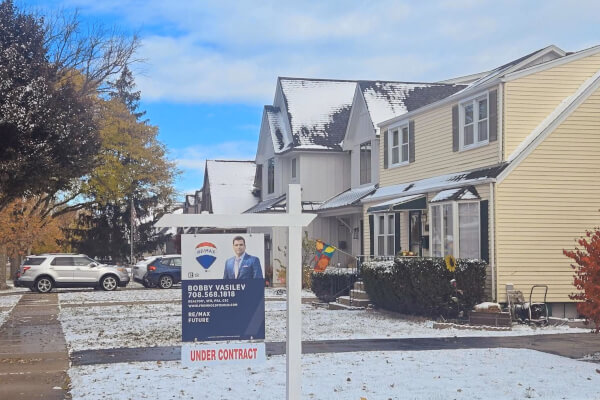
Why Families Decide to Sell Their Inherited House in IL:
Here are the common reasons heirs choose to sell a house in probate rather than hold onto it:
- The house needs extensive repairs or updates that the estate cannot afford.
- The home is located too far away for convenient management.
- There are unpaid taxes or debts tied to the property that must be paid from sale proceeds.
- Heirs want to liquidate the asset quickly to split the inheritance.
- The estate can’t afford to maintain the home (insurance, utilities, repairs) during probate.
- The home holds difficult memories or significant emotional weight.
- The home is vacant and at risk of vandalism or city fines.
Whatever your reason, selling your property is possible, and we’re here to make the process as smooth and stress-free as possible.
How We Help You Sell an Inherited House for Top Dollar
We combine the speed of a cash sale with the maximum value of a traditional listing, creating an optimized approach to sell your inherited house fast and for the highest possible price.
Our Dual-Strategy Approach
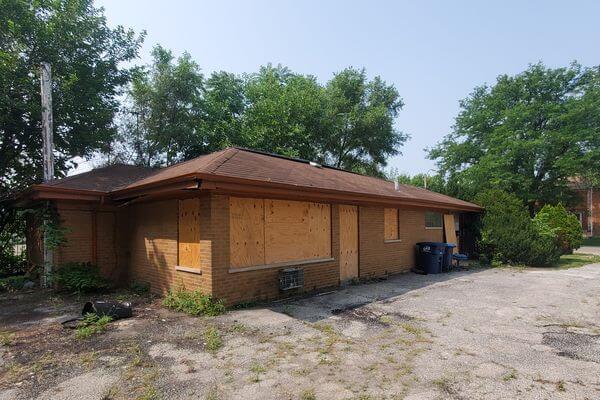
Fast Cash Sale
If the estate is facing immediate debt obligations, the property is in poor condition, or the beneficiaries require a fast settlement.
- Goal: Speed and Convenience
- Process: We can facilitate a quick, cash offer from our vetted network of trusted investors.
- Benefits: Close in 7-21 days, skip all repairs, no cleanout, quick way to turn the house into cash for the estate.
Maximized Market Sale
Best for estates that are financially stable, inherited properties in decent condition, or heirs prioritizing the highest possible profit.
- Goal: Highest possible net profit.
- Process: We help you list and sell the property quick on the open market
- Benefits: Close in 30-45 days, attract competitive market offers and maximize the sales price

Don’t Delay, Take Action Today!
Don’t let the house become your biggest source of stress or delay in the probate process. We’ll help you determine the best path forward. Whether you prefer a Fast Cash Sale or a Maximized Market Sale, find out how much your inherited house could sell for.
Costs When Selling an Inherited Property in Illinois
Understanding the costs helps you accurately estimate your net proceeds. Common expenses paid out of the sale include:
- Attorney fees and probate court costs.
- Title charges and closing costs.
- Transfer taxes (State, county, and local, if applicable).
- Outstanding property taxes.
- Cleanout or repairs (optional).
We help minimize unnecessary costs and schedule free estate sale coordination when needed, reducing your out-of-pocket expenses.
Tax Considerations for Selling an Inherited House
Illinois heirs typically benefit immensely from the step-up in basis. This means:
- You’re taxed on the value from the date of death (the stepped-up basis).
- You are not taxed on the amount the deceased originally paid.
This provision usually minimizes capital gains tax. You may only owe taxes if:
- You rent the home.
- The home appreciates significantly before sale.
- Multiple heirs split proceeds into different taxable accounts.
We can help you estimate your net sale proceeds and work directly with your tax professional.

Timeline – How Long Does It Take to Sell an Inherited House?
The timeframe for selling an inherited property can be broken down into clear stages:
| Stage in the Process | Typical IL Timeline |
| Legal Authority (Probate opened / Letters of Office) | 1- 4 months (Cook County often moves slower than DuPage, Lake, and the surrounding counties) |
| Preparation & Listing (Cleanout, pre-sale prep, listing) | 2-3 days (can be done while waiting for court) |
| Contract (Offer accepted to closing process start) | 1-2 weeks |
| Closing (Final transfer of title) | 20-30 days |
The Greatest Cash Offer Myth
You’ve probably herd this before: “We Buy Houses As-As. Fst Cash offer. Close in 7 days!“
Well… the reality is a bit different. While fast closings are possible, they are rarely as instant as advertised. Even with cash, Illinois home sales still involve steps like a title search, water certification, and transfer stamps.
A growing number of local municipalities in Cook, DuPage, and Lake County areas require pre-sale inspections or compliance checks, which alone can take several weeks. If your property is part of an HOA or condominium association, board approvals or right-of-first-refusal clauses can delay closing further.
A realistic timeline for a cash sale is two to three weeks, not a few days. Always verify that the buyer (and your property) can clear all requirements before signing.

Don’t sell fast, sell right! Talk to us to get a complete, no-obligation As-Is market assessment, and find out what your home could realistically sell for on the open market.

The RE/MAX Advantage
Choosing the right real estate professional can make all the difference in your home sale.
With an experienced RE/MAX agent by your side, you gain access to industry expertise, powerful marketing strategies, and a proven track record of success.
Homes listed with a skilled agent from a reputable company typically sell faster and for a higher price.
Strategic Pricing for Maximum Value – We provide a detailed market analysis to ensure your home is priced competitively, helping you secure top dollar.
Powerful Marketing Exposure – From high-quality photography to targeted digital and offline marketing, We showcase your home to attract serious buyers.
Expert Negotiation – We advocate for your best interests, using market insights to negotiate the highest possible price and best terms.
Seamless Transaction Management – Selling a home involves contracts, disclosures, and legal details. We handle every step with precision to ensure a smooth, stress-free process.

Testimonials
Hear from Heirs Who Sold Their Inherited House Fast

Bobby is a great realtor and was a tremendous help to selling our house after my mother passed away. He helped in preparing for the sale and assuring everything went smoothly through the closing. He was a pleasure to work with, a great communicator, and I would not hesitate working with him again in the future!

Dan B.
Lake Bluff, IL
I am so happy with Bobby Vasilev. I inherited a house in Illinois and live in Florida. Because of family health issues I was not able to take care of any of dealings that was required to sell the house or travel to Illinois. Bobby took care of everything. His was an immense help to me and I would highly recommend him. Thank you Bobby

Linda V.
Joliet, IL
Absolutely top-notch. Very knowledgeable and smart. Understood market. Gave good advice without being pushy. Accommodating to seller’s positions. He understood buyers’ needs and was able to suggest useful changes to structures of possible contracts. Worked very hard to get property in shape for sale.

Joel H.
Northbrook, IL
Here’s
How it Works

Step 1: Schedule your free consultation
Let’s have a no-obligation conversation to discuss your unique situation and craft the best possible plan to meet your needs.

Step 2: We handle everything for you
From preparing the property for sale to marketing and finding the right buyer, we take care of every detail.

Step 3: Collect your cash at closing
We guide you throught the entire process and bring the deal to the closing table so you can receive your funds without any hassle.
People Also Ask When Selling an Inherited House
Can I sell my inherited house if I live out of state?
Yes. A large portion of our clients are out-of-state heirs (e.g., in Florida, Texas, California, or internationally). We handle the entire process remotely, acting as your local liaison on the ground in Illinois.
Can you sell a house while the estate is in probate?
Yes. A house can be sold during probate if the executor or administrator has legal authority through the will or a court-issued Letters of Office.
Can I sell the house immediately after probate closes?
Yes. Once probate formally closes and the executor receives final authority, the home is fully transferred to the heirs and can be sold normally without the need for additional court oversight or special probate real estate procedures.
Can you sell an inherited house without probate in Illinois?
It depends. If the property was jointly owned, placed in a trust, or transferred via a Transfer on Death Instrument (TODI), probate may not be required.
Get Help Selling Your Inherited House in Illinois
Call Us today for a Free, No-obligation Consultation. We’ll provide you with a clear roadmap to sell your inherited house quickly and for the best possible outcome.