

Behind on Your Mortgage in Illinois? Options for Selling Your House Before Foreclosure
Behind on Mortgage Payments in Illinois? You Still Have Options
Falling behind on your mortgage is stressful, but being 1, 2, or 3 months behind does not mean you have lost your home or your equity.
If you are thinking, “I am behind on my mortgage and need to sell my house in Illinois,” the most critical advantage you have right now is time. Being proactive in the early stages of delinquency, before your lender initiates a formal court filing, gives you more time to explore ways to stop foreclosure, sell on your terms, and potentially preserve more of your equity while limiting the damage to your credit.

Whether you missed payments due to job loss, illness, rising living expenses, or a life transition, this guide outlines your rights, your timeline, and how to execute a quick, profitable home sale in Illinois.
What Happens When You Fall Behind on Your Mortgage in Illinois?
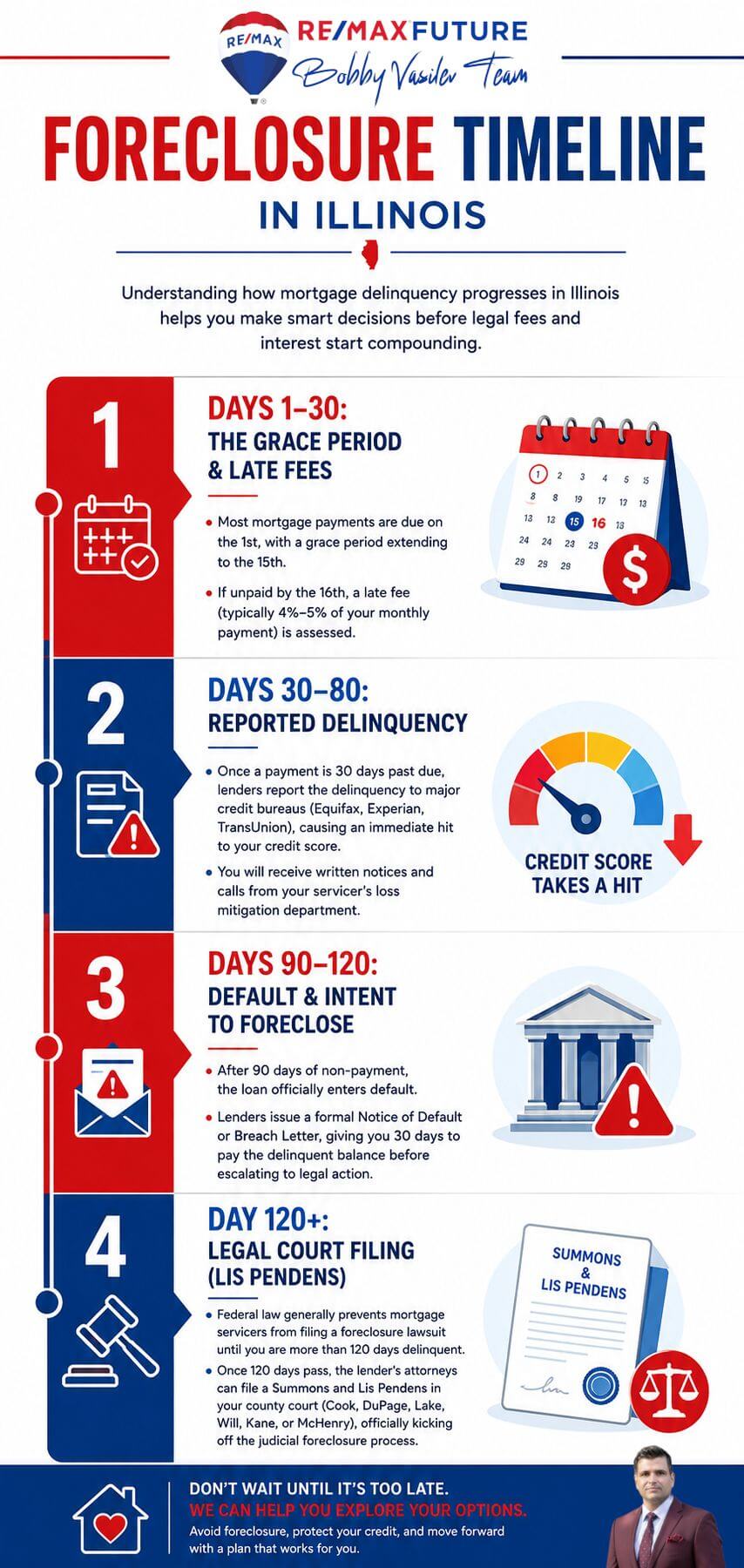
Understanding how mortgage delinquency progresses in Illinois helps you make smart decisions before legal fees and interest start compounding.

Days 1–30: The Grace Period & Late Fees
- Most mortgage payments are due on the 1st, with a grace period extending to the 15th.
- If unpaid by the 16th, a late fee (typically 4%–5% of your monthly payment) is assessed.
Days 30–80: Reported Delinquency
- Once a payment is 30 days past due, lenders report the delinquency to major credit bureaus (Equifax, Experian, TransUnion), causing an immediate hit to your credit score.
- You will receive written notices and calls from your servicer’s loss mitigation department.
Days 90–120: Default & Intent to Foreclose
- After 90 days of non-payment, the loan officially enters default.
- Lenders issue a formal Notice of Default or Breach Letter, giving you 30 days to pay the delinquent balance before escalating to legal action.
Day 120+: Legal Court Filing (Lis Pendens)
- Federal mortgage servicing rules generally prevent the first foreclosure filing until you are more than 120 days delinquent. You can learn more about the federal foreclosure timeline from the Consumer Financial Protection Bureau.
- Once 120 days pass, the lender’s attorneys can file a Summons and Lis Pendens in your county court (Cook, DuPage, Lake, Will, Kane, or McHenry), officially kicking off the judicial foreclosure process.
Key Takeaway: Acting before a foreclosure lawsuit is filed gives you the greatest amount of flexibility. You may be able to avoid additional foreclosure-related legal costs and keep more control over the sale price, timing, and transition out of the property.
Can You Sell Your House If You Are Behind on Mortgage in Illinois?
The short answer is “Yes”. In Illinois, you own your property and retain full legal ownership until the court confirms the Sheriff’s Sale. Being in “foreclosure” does not mean the bank owns your home yet – it means they have started a legal process to eventually take it.

Common Misconceptions About Selling While Behind on Payments:

I have to pay all my past-due mortgage payments before I can sell.
False. You do not need out-of-pocket cash to list your home. All past-due payments, late charges, and accrued interest are simply paid off directly from the buyer’s funds at the closing table.

I need my lender’s permission before I can list my house.
False. As long as the estimated sale price covers your total loan payoff (principal + past-due amounts), you can list and sell your home without lender approval.

Once foreclosure starts, I can’t sell the house anymore.
False. Receiving a foreclosure summons or other court documents does not automatically prevent you from selling your home. You can generally continue pursuing a sale while the foreclosure case is pending. However, the timeline becomes much more important because you need enough time to find a buyer, complete the transaction, obtain the mortgage payoff, and close before the property reaches the Sheriff’s Sale stage.
2 Ways to Sell Your House When Behind on Payments in Illinois
Depending on your timeline, property condition, and equity position, there are two primary sale strategies to consider.
Our Dual-Strategy Approach
Strategy 1: Sell on the Open Market
Best for maximizing potential equity
If you are in the early stages of foreclosure (Notice of Default/Lis Pendens) or struggling to pay your mortgage payments.
- How It Works: We list your home on the local MLS, targeting active home buyers in Cook, DuPage, Lake, or surrounding counties.
- The Goal: Generate competing offers to net you the highest possible check at closing
- The Outcome: The mortgage company is paid in full at closing, the default is cleared, and you walk away with your remaining cash equity.
Strategy 2: Sell Directly for Cash
Best for speed and convenience
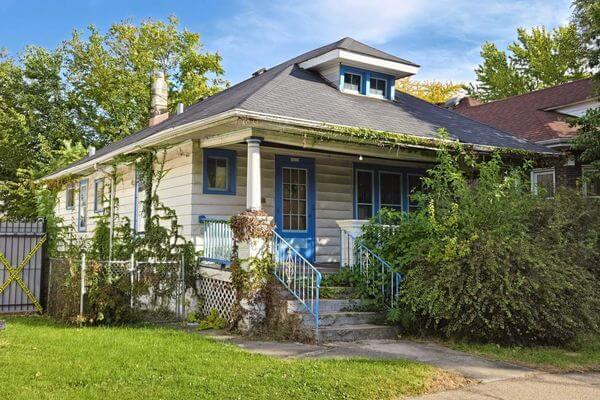
If you are approaching the 120-day default mark, need to relocate quickly, or have a property in severe disrepair, you may want to sell your house as-is through a direct cash sale
- How It Works: We connect you directly with our network of vetted Illinois cash buyers and real estate investors.
- The Goal: Eliminate showings, inspection contingencies, and lender delays.
- The Outcome: Close in as few as 7-21 days, sell completely “as-is” without fixing anything, and stop lender collection calls instantly.
What If You Owe More Than Your Home Is Worth? (Short Sale)
If you owe more on your mortgage than your Illinois home is currently worth, you may still be able to sell through an approved Short Sale.
A short sale allows you to sell the property for its current market value even when the proceeds are not enough to fully pay off your mortgage. Your mortgage lender or servicer must approve the sale and agree to accept the proceeds to satisfy the loan.

What Happens to the Remaining Balance?
Do not assume that an approved short sale automatically eliminates every dollar you owe. Before closing, you should understand exactly what the lender has agreed to do with any remaining balance.
Depending on the loan and the lender’s approval, the agreement may include a waiver of the remaining deficiency. Make sure any agreement regarding the remaining balance is confirmed in writing before closing.
A short sale can also take longer than a conventional sale because the lender must review and approve the transaction. If foreclosure proceedings have already started, timing becomes especially important.
If you believe you owe more than your home is worth, determining your home’s current market value early can help you understand whether a short sale or another option makes sense for your situation.
Alternatives to Selling: Exploring All Your Options
Before deciding to sell, it is important to review every available option to bring your loan current:
Loan Reinstatement
In Illinois you have a legal right to reinstate your mortgage, allowing you to stop foreclosure by paying only the missed payments, fees, and costs within 90 days of being served the foreclosure lawsuit summons.

Refinancing
If you have enough equity in your home you can try to refinance the loan. Please note that, refinancing when you are in foreclosure is difficult and you may end up paying higher interest rate and high loan charges.
Loan Modification
You may qualify for a federal or local government program that gives struggling homeowners the opportunity to modify their loan. A loan modification changes the terms of your mortgage loan. The goal is to make your loan more affordable so you can bring it up to date.
Forbearance
Forbearance sometimes may refer to a repayment plan. But, in general it is an agreement between the homeowner and the mortgage company where you make lower payments (or no payments) for a certain period of time. Please note that you still owe the full amount plus accrued interest, which must be repaid later through various methods like a lump sum, repayment plan, or adding to the loan balance.

Bankruptcy
Filing for bankruptcy triggers an “Automatic Stay,” which is a powerful legal injunction that immediately halts any foreclosure action or Sheriff’s Sale.
- Chapter 7 can delay a sale for a few months, giving you extra time to move, but it rarely saves the home long-term if you can’t pay the arrears.
- Chapter 13 is the most common for homeowners because it allows you to create a 3-to-5-year plan to pay back your missed payments and keep the house.
Deed in Lieu of Foreclosure
This is essentially “handing the keys back to the bank.” You voluntarily transfer the title to the lender to satisfy the debt. It is usually faster than a short sale, but most lenders will only consider it if there are no other liens on the property and you have already tried to sell it unsuccessfully.
Each option has different requirements, costs, timelines, and consequences. If your goal is to keep the home, these alternatives may be worth exploring with your mortgage servicer, housing counselor, attorney, or financial professional. If keeping the home is no longer realistic, selling may allow you to resolve the mortgage while you still have control over the property.
Frequently Asked Questions

Find answers to common questions other Illinois homeowners ask about falling behind on mortgage payments.
How many missed payments trigger foreclosure in Illinois?
Most mortgage lenders wait until you are 120 days delinquent (4 missed monthly payments) before formally filing a judicial foreclosure lawsuit in Illinois court. However, late fees and credit reporting begin after 30 days.
Can I sell my Illinois home if I am already 3 or 4 months behind on payments?
Yes. You retain the legal right to sell your property right up until the court confirms a Sheriff’s Sale. Selling before a lawsuit is filed is ideal, but you can sell even after receiving court notices.
Will selling my house stop late fees and collection calls?
Yes. Once a sale closes, the title company wire-transfers the total payoff balance directly to your mortgage servicer. This fully satisfies the debt, halts legal proceedings, and ends all collection activities.
Will a Short Sale help me avoid foreclosure in IL?
Yes. If the bank approves a Short Sale, they agree to halt the foreclosure proceedings to allow the sale to close. This is often the best way to avoid a foreclosure judgment on your credit report.
How much cash will I get at closing if I am behind on payments?
Your net proceeds equal your home’s final sale price minus your outstanding mortgage balance, accumulated late fees, property taxes, and standard closing costs. We provide a Confidential Equity Analysis before you list so you know exact figures in advance.
Take the First Step to Protect Your Equity Today
Don’t wait for your lender to file court papers. If you are behind on your mortgage in Illinois, contact us today for a free, no-obligation consultation to explore your home’s value and review your sale options.
Contact Us today for a Free, No-obligation Consultation