



Falling behind on your mortgage can feel overwhelming, especially when you start receiving notices from your lender or hearing the word foreclosure.
If you are facing this situation, understanding where you are in the Illinois foreclosure timeline is an important first step. It can help you understand what is happening, how much time you may have, and what options you may still have available

Table of Contents
- First, What Is the Difference Between Foreclosure, Pre-Foreclosure, REO, and a Short Sale?
- The Illinois Foreclosure Timeline
- Days 1–30: Your First Missed Payment
- 30–60 Days Late: Your Second Missed Payment
- 60–120 Days Late: Notice of Intent to Foreclose
- 120–175 Days Late: You Are Served With a Foreclosure Summons
- 60 Days After Being Served: A Default Judgment May Be Entered
- 90 Days After Being Served: Right to Reinstate Expires
- Approximately 7 Months After Being Served: Right of Redemption Expires
- After the Redemption Period: Sheriff’s Foreclosure Sale
- Approximately 15 Days After the Sale: Sale Confirmation and Eviction Order
- Approximately 30 Days After the Eviction Order: Sheriff’s Eviction
- How Long Does Foreclosure Take in Illinois?
- Can You Sell Your House During Foreclosure in Illinois?
- The Most Important Part of the Illinois Foreclosure Timeline
- Don't Wait Until the Foreclosure Sale to Explore Your Options
Illinois is a judicial foreclosure state, which means the lender must go through the court system to foreclose on a property. The process can take 12 to 15 months or more, giving homeowners time to understand what is happening and, in many cases, explore ways to avoid foreclosure.
Understanding the Illinois foreclosure timeline is important because your options can change as the process moves forward.
Here is what generally happens after you fall behind on your mortgage.
First, What Is the Difference Between Foreclosure, Pre-Foreclosure, REO, and a Short Sale?
These terms are often used interchangeably, but they describe very different points in the process.
- Foreclosure is the legal process a lender uses to take ownership of a property when the homeowner has failed to meet the mortgage obligations. In Illinois, the lender must file a lawsuit and obtain a judgment of foreclosure before the property can proceed to a foreclosure sale.
- Pre-foreclosure refers to the period when the homeowner is behind on the mortgage but the foreclosure process has not yet been completed. Depending on where you are in the process, you may still have several options available.
- REO, or real estate owned, refers to a property that has become owned by the lender after a foreclosure sale. If a property does not sell to a third party at the foreclosure auction, the lender may take ownership of it.
- A short sale is different from foreclosure altogether. A short sale occurs when the property is worth less than the amount owed on the mortgage and the lender agrees to accept less than the total amount due from the sale proceeds.
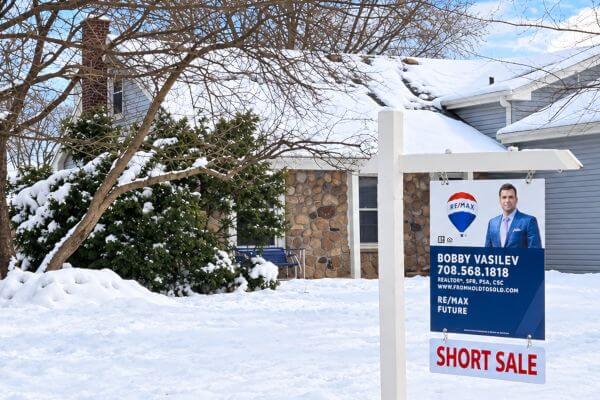
For homeowners who are underwater on their mortgage, a short sale can sometimes provide an alternative to allowing the property to go through foreclosure.
Now let’s look at what the Illinois foreclosure timeline can look like.
The Illinois Foreclosure Timeline
Days 1–30: Your First Missed Payment
Most mortgage payments are due on the first of the month, although many loans have a grace period before a late payment is reported or a late fee is charged.
Missing one payment does not mean your home is immediately in foreclosure.
At this point, the most important thing you can do is communicate with your lender. If you know you are going to have trouble making your payment, don’t simply ignore the problem.
Explain why you are behind and ask what options may be available.
The earlier you address the problem, the more options you may have.
30–60 Days Late: Your Second Missed Payment
By this point, you have missed another payment and your delinquency is becoming more serious.
Your lender may increase its collection efforts and begin discussing options for bringing the loan current.
This is still an important opportunity to take action before the situation moves into the legal foreclosure process.
If you have enough equity in the property, selling the home may also be an option worth considering. Selling before the foreclosure process advances too far can give you more control over the transaction and may allow you to protect some of your equity.
60–120 Days Late: Notice of Intent to Foreclose
If the mortgage remains delinquent, the lender may send a formal Notice of Intent to Foreclose and begin working with its attorney to initiate foreclosure proceedings.

At this stage, the situation can become much more serious.
Your default may become a matter of public record, and you may start receiving letters, phone calls, or even personal solicitations from companies claiming they can “save your home.”
Be careful. Foreclosure distress can attract scammers and companies making promises that sound too good to be true. Never sign over your deed or send money to someone simply because they claim they can stop your foreclosure.
If you are considering selling your home, refinancing, pursuing a loan modification, or negotiating with your lender, this is the time to understand your options rather than waiting for the foreclosure lawsuit to progress.
120–175 Days Late: You Are Served With a Foreclosure Summons
At this point, the lender may have filed a foreclosure lawsuit against you. You will generally be personally served with a summons by the sheriff or a process server. Ignoring the summons does not make the foreclosure go away. If personal service cannot be completed, the lender may be able to provide notice through publication as permitted by law.
Once you have been served, you have a limited amount of time to respond. Under the timeline outlined above, you generally have 30 days to answer. This is a point where getting appropriate legal advice is extremely important.
If you have been served with foreclosure papers, the Illinois Courts mortgage foreclosure resources provide access to statewide foreclosure forms and court information.
60 Days After Being Served: A Default Judgment May Be Entered
What happens if you simply ignore the lawsuit? The foreclosure does not stop. If you fail to respond to the summons, the lender may file a motion for default. The court may then enter a Default Judgment against you. A default judgment can move the foreclosure significantly closer to a sale. That is why ignoring foreclosure notices is almost never a good strategy.
90 Days After Being Served: Right to Reinstate Expires
Under the timeline for an Illinois foreclosure, your right to reinstate the loan expires at this point. Reinstatement generally means bringing the mortgage current by paying the past-due amount, along with applicable late charges, court costs, attorney fees, and other allowable expenses.

This is different from paying off the entire mortgage.
The goal of reinstatement is to bring the loan current and stop the foreclosure from moving forward. Once this deadline passes, your options become considerably more limited.
Approximately 7 Months After Being Served: Right of Redemption Expires
The next major milestone is the expiration of your right of redemption.
Redemption refers to your ability to pay off the loan and redeem the property before the applicable deadline.
In the timeline described above, the redemption period expires approximately seven months after service or three months after the foreclosure judgment, whichever is later.
For a homeowner who wants to sell the property, this period can be extremely important.
A sale of the property may provide a way to pay off the mortgage and other liens before the foreclosure sale, assuming the property can be sold for enough to satisfy the obligations or the lender agrees to a short sale.
After the Redemption Period: Sheriff’s Foreclosure Sale
Once the applicable redemption period expires, the property can proceed to a Sheriff’s Foreclosure Sale.
This is the foreclosure auction.

The property is offered for sale, and the proceeds are applied according to the applicable foreclosure and lien rules.
If the property does not sell to another buyer at the auction, the lender may ultimately take ownership of the property and it can become REO.
Importantly, the sheriff’s sale is not necessarily the same thing as being physically removed from your home that day.
There are additional steps before an eviction can take place.
Approximately 15 Days After the Sale: Sale Confirmation and Eviction Order
After the foreclosure sale, the court enters an order confirming the sale. An Order for Eviction may also be entered. The eviction order is generally stayed for 30 days, giving the homeowner additional time before the eviction can be carried out.
Approximately 30 Days After the Eviction Order: Sheriff’s Eviction
Once the stay expires, the eviction order can be delivered to the sheriff. If you have not vacated the property, the sheriff may ultimately carry out the eviction. At that point, the foreclosure process has progressed very far and the homeowner has far fewer options than they had earlier in the timeline.
* Note: The above time frames are approximations. Your case could move more quickly or more slowly.
How Long Does Foreclosure Take in Illinois?
Because Illinois uses a judicial foreclosure process, an Illinois foreclosure can take approximately 12 to 15 months from the beginning of the process to completion.
However, this is only an approximation.
Some foreclosures move faster. Others take considerably longer depending on the circumstances of the case, court activity, lender actions, loss mitigation efforts, bankruptcy, defenses, and other factors.
The important point is that foreclosure is a process, not a single event.
You generally have opportunities to take action along the way.
Can You Sell Your House During Foreclosure in Illinois?
Yes. Being in foreclosure does not automatically mean you lose ownership of the property. You are still the owner until the final sheriff’s sale and court confirmation of the sale.
Depending on where you are in the foreclosure process, selling the property may be one way to resolve the mortgage delinquency.
If the property has enough equity, the sale proceeds may be used to pay off the mortgage, foreclosure costs, liens, and other expenses, with any remaining equity going to the homeowner.
If the home is worth less than what is owed, a short sale may be another possibility.
A short sale requires approval from the mortgage lender and any other lienholders involved. The lender reviews the proposed sale and determines whether it will accept the proceeds as satisfaction of the debt.
The earlier you explore this option, the more time you generally have to market and sell the property before the foreclosure advances further.
The Most Important Part of the Illinois Foreclosure Timeline
If you are behind on your mortgage, don’t wait for the foreclosure sale before figuring out what to do.
The further the process advances, the more complicated your situation can become.
Depending on your circumstances, you may be able to:
- Bring the mortgage current
- Negotiate a loan modification or other loss-mitigation option
- Sell the property and pay off the mortgage
- Pursue a short sale if the property is worth less than the amount owed
- Discuss bankruptcy or other legal options with an attorney
There is no single solution that works for every homeowner.
What matters most is understanding where you are in the foreclosure timeline and what options are still available to you.
Don’t Wait Until the Foreclosure Sale to Explore Your Options
If you are behind on your mortgage, understanding where you are in the Illinois foreclosure timeline is the first step. The sooner you understand your options, the more time you may have to decide what makes the most sense for your situation.
If selling your home is one of those options, you may be able to sell your house before the foreclosure sale and use the proceeds to resolve the mortgage. If you owe more than the property is worth, a short sale may also be an option.
* Foreclosure timelines can vary based on the circumstances of each case. This article is for general informational purposes and is not legal or financial advice. If you are facing foreclosure, consult a qualified Illinois foreclosure attorney about your specific situation.